By Neill Simmons
The highlight of November comes on Tuesday night, the 4th, when a beautiful thin, crescent Moon will appear to be extremely close to the planet, Venus. Look low in the west. At the same time, the planet Mercury will be below and to the right of Venus. Watch nightly as Mercury rises higher and higher in the west until November 19 when it peaks.
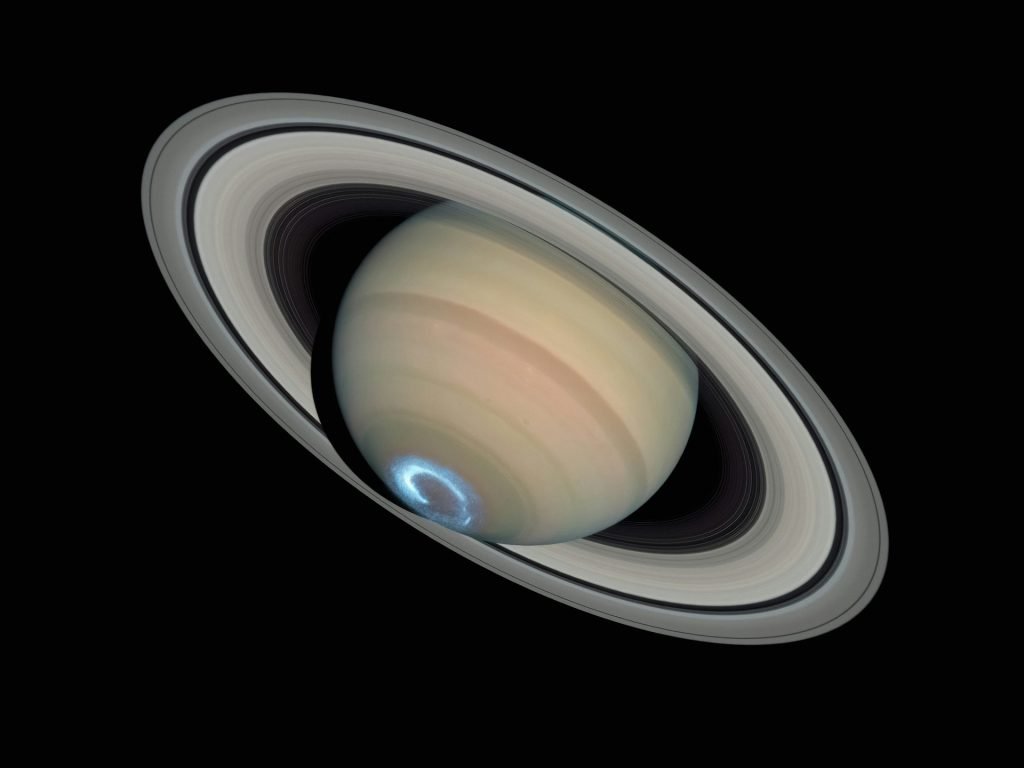
The planet Saturn will be in the south and easy to spot. Look on the 10th of the month when the Moon will be near the ringed planet. Saturn is considered one of the gas giants with no solid ground. It is composed of hydrogen and helium and lacks a definite surface.
Friday the 15th brings a special event. It will be the fourth “Super Moon” in a row. The Moon will appear larger than normal because it will be closer to Earth. This Moon is also known as the “Beaver Moon. This name comes from the time of year when beavers prepare for winter by building dams and stocking up on food. It may also refer to the time when beavers were trapped for their fur during the North American fur trade.
Saturday the 16th will bring another close approach between the Moon and Jupiter. This is called a conjunction. A conjunction is a celestial event when the Moon, a planet, or a star appear close together in the night sky. Besides having over 80 moons, Jupiter is the largest planet in our Solar System. If it was a hollow sphere, 1000 Earths could fit inside!
It’s hard to believe as we go into fall, but the “Summer Triangle” is easy to spot in the west. The Summer Triangle is not a constellation but an asterism. An asterism is a pattern or group of stars in the sky. There are 88 constellations and every other pattern of stars is an asterism.
Look in the north to view two constellations – Cassiopeia, the Queen, and Cepheus, the King. Cassiopeia is in the shape of the letter “W” and Cepheus is in the shape of a house. In Greek mythology, Cassiopeia and Cepheus ruled Ethiopia and were the parents of Andromeda. They are the only married couple in the night sky. Both of these constellations are visible near Polaris, the North Star.
In mid-October, NASA launches the largest space probe to Jupiter’s moon, Europa. It is named the “Europa Clipper” and will search for life in Europa’s ocean. It is scheduled to arrive by April 2030 and it will have traveled 1.8 billion miles!
The Griffith Park Observatory will be hosting a free Star-gazing party on Saturday, November 9. The event starts at dusk and ends at 10 pm. The large telescope will be open for viewing.
On Sunday, November 3, the International Space Station will be visible crossing the dark morning sky at 6:35 am. It will be up for seven minutes. It will be coming out of the northwest and will be overhead by 6:38 pm. It’s traveling at 17,200 miles per hour and can circle the earth in 90 minutes!
When not star-gazing, Neill Simmons is a Wealth Advisor with LPL Financial in Woodland Hills. If you have any astronomy or financial questions, he may be reached at 818-936-2626 or neill.simmons@lpl.com.