By Jay Ross
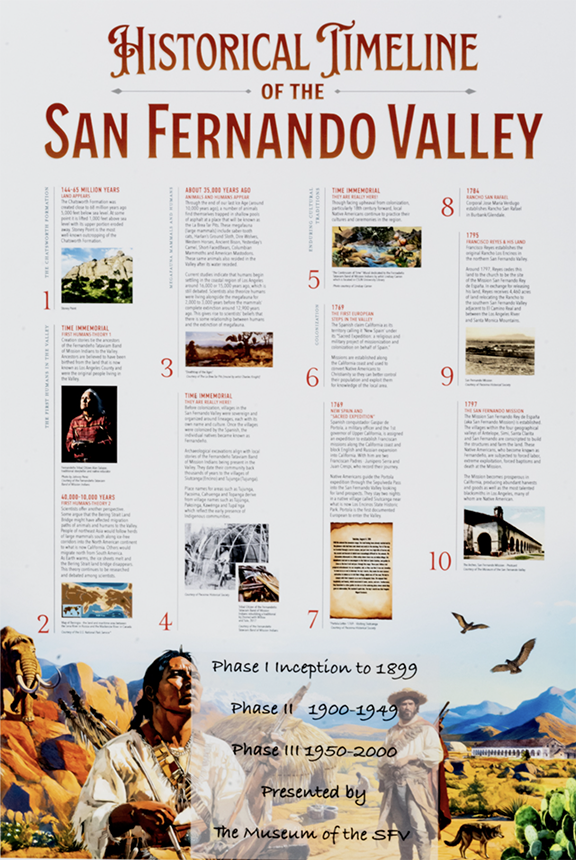
On June 6, it was an honor to attend the unveiling of Phase III (1950–2000) of the Historic Timeline of the San Fernando Valley. This important project was created to honor the people, places, movements and stories that helped shape the Valley.
The San Fernando Valley Timeline is a public history project dedicated to preserving and sharing the stories, people and key moments that shaped the region over time.
Phase III covers the years 1950 to 2000, a period of major social, cultural, educational, and civic change that continues to influence life in the Valley today.
Rather than focusing only on well-known people or major events, the timeline also highlights the communities, workers, artists, advocates, and families whose efforts helped define the Valley’s identity. Through research and community collaboration, the project brings attention to stories that are often overlooked and places them at the center of the historical record.
As visitors move through the exhibition, they are encouraged to reflect on the many layers of Valley history. The timeline serves as a living record that connects past generations to the present and creates opportunities for future stories to be added.
The event was emceed by Eric Stuart, Vice President and Educator for the Museum. Guests also heard recorded remarks from U.S. Senator Alex Padilla.
Crystal Jackson, Timeline Co-Project Director, historian, author, filmmaker, museum board member, and founder and president of the Pacoima Historical Society, delivered a moving presentation about the original Timeline Mural and the creation of the new Phase III addition covering 1950 to 2000.
Attendees also heard from Jackie Langa, Timeline Co-Project Director, museum Treasurer and Past President, historian, and writer. Her remarks were heartfelt, informative, and inspiring. She explained that the museum is operated entirely by volunteers whose dedication and passion help preserve and promote the rich history of the San Fernando Valley.
Michael Stevens, President of the Museum of the San Fernando Valley, spoke about the museum’s mission and its ongoing commitment to preserving and sharing the Valley’s history.
The six invited guest speakers were engaging and Valley-proud to be included as part of the Timeline. Joy Picus, the first woman from the San Fernando Valley elected to the Los Angeles City Council, reflected on her years of public service. She spoke about the challenges women faced in politics at the time and expressed gratitude for the support she received from friends and community members who helped her earn a seat on the City Council. There were moments where she had us smiling with her antidotes.
Nicole Chase, CEO of the Boys and Girls Club of the San Fernando Valley, captured the visitors’ attention with her deep-felt passion for the youth empowerment and community development that was provided by the northeast Valley Boys and Girls Club to Valley children and residents for over 50 years.
Other guests included Rita Cofield, a public historian and cultural resource professional with the Getty Conservation Institute and a lead for identifying local sites of cultural importance to the Black community in Southern California, who spoke about Pacoima and its importance. Muralist Hector Ponce, spoke about his and his son, Levi Ponce’s, public artworks that helped transform Van Nuys Boulevard into the “Mural Mile.” Finally, Philip Ha shared the important role Vietnamese refugees played in the Valley’s transition into the computer age. His remarks resonated with many attendees. As someone who began an information technology career in the San Fernando Valley in 1988, I could personally relate to his shared experiences. His mention of the floppy disk brought back fond memories and brought smiles to many in the audience.
Andreas Farmakalidis, Chair-person of the North Valley Regional Chamber of Commerce, presented a Certificate of Recognition to the museum. The museum was also honored to welcome Councilmember Bob Blumenfield of Council District 3, who presented a certificate from the City and performed the ribbon-cutting ceremony for the unveiling of the Phase III timeline mural.
Special thanks go to the Los Angeles Department of Cultural Affairs, whose grants helped make the timeline project possible, as well as Phi Delta Psi and the Pacoima Historical Society for their support.
The Museum of the San Fernando Valley is an all-volunteer 501(c)(3) nonprofit organization located at 18904 Nordhoff Street, Northridge, CA 91324. Founded in 2005, the museum is dedicated to preserving, sharing and celebrating the inclusive history and culture of the San Fernando Valley.
Jay Ross is a freelance photographer based in the San Fernando Valley.