The history of those working behind the cameras is even less admirable.
For the first half of the 20th century, the studio gates were firmly shut when it came to Black executives, cinematographers, production designers, and other behind-the-scenes professionals. From the 1920s through the 1950s, the Valley’s major film facilities churned out Westerns, screwball comedies, and noir thrillers — and yet few Black faces were in positions of importance behind the screen.
The four Valley studios – Universal, Disney, Warner Bros., and Radford – did not go out of their way to seek out technicians and other behind-the-camera filmmakers. It didn’t help that Valley residential communities often had restrictive covenants that kept people of color from buying homes in the post-World-War II boom.
It wasn’t just the studios that failed when it came to providing open doors to Black people. Film unions and guilds were notorious for policies inimical to inclusion of Black and brown people, while the many outside companies which provided services to studios and production houses were mostly owned and managed by white people.
But progress is being made, starting with the civil rights movement of the 1960s and continuing today. The gates guarding the film and television industries are opening up. While still few in number, studios have, since the 1970s, been placing Black executives in senior roles.
Nigerian born Pearlena Igboikwe is Chairman of Television Studios, NBC Entertainment & Peacock Scripted at NBCUniversal, where she oversees NBC Entertainment, including scripted, unscripted, late-night, and specials, as well as Peacock scripted programming and the company’s major TV production studios.
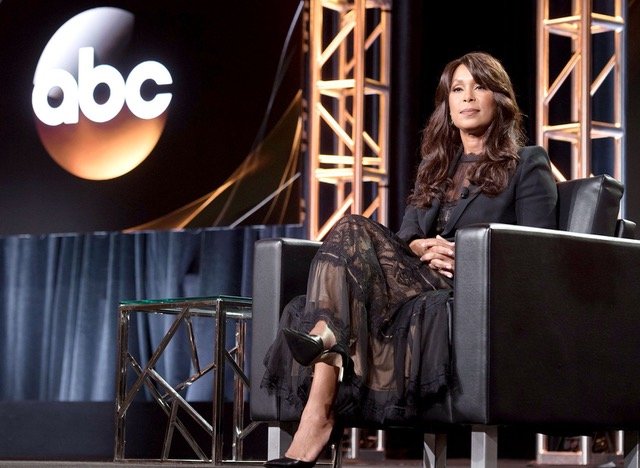
Channing Dungey is Chairman and CEO at Warner Bros. Television Group & U.S. Networks, responsible for all scripted, unscripted, and animated TV production, as well as Warner Bros. Discovery’s U.S. Networks portfolio.
The San Fernando Valley became one of the most important gateways for Black creative authority in Hollywood. Few careers illustrate that evolution more clearly than those of Gordon Parks and Bill Duke, whose professional work spans feature films and television.
Gordon Parks entered feature filmmaking at Warner Bros. with The Learning Tree (1969), shot largely on location in Kansas but edited and produced within the studio in Burbank. When Parks directed Shaft (1971) and Shaft’s Big Score! (1972), much of the post-production and studio oversight occurred within Valley-based infrastructure.
Parks became the first major Black director to exercise sustained control over studio features at the moment when the Valley supplanted Hollywood as the industry’s nerve center. His success demonstrated that Black filmmakers could command authority within the studio system, not merely on independent margins.
Bill Duke has been an actor, director, producer, and screenwriter. Appearing as an actor in films such as Car Wash (1976), American Gigolo (1980), and Commando (1985), he transitioned into directing during the 1980s. Like many Black film professionals, Duke got his start in television, directing episodes of Hill Street Blues, Miami Vice, Cagney & Lacey, and later The X-Files – all series produced or post-produced at Universal Studios, Warner Bros. Television, and Radford Studio Center. He directed films such as The Killing Floor (1984), A Rage in Harlem (1991), and Deep Cover (1992).
Later Black directors followed the path Duke forged. Figures such as Ernest Dickerson, Carl Franklin, Mario Van Peebles, and Paris Barclay built résumés through Valley-based television before moving into feature films. Barclay became one of the most influential TV directors and producers, working extensively at Universal and Fox facilities in the Valley and later serving as president of the Directors Guild of America.
Floyd Norman was Disney’s first Black animator, beginning at the studio in the 1950s. He worked on Mary Poppins (1964), The Jungle Book (1967), The Hunchback of Notre Dame (1996), Mulan (1998), Dinosaur (2000), and many more. Norman left Disney to co-found Vignette Films, Inc., producing six animated films on Black history. He rejoined Disney to work on several more films.
Frank Braxton was one of the first animators hired at both Disney and Warner Bros., starting as a Disney trainee before signing on at Warner Bros. He became the first Black president of the Screen Cartoonist’s Guild…a memorable achievement in Hollywood union history.
Ron Husband was also a pioneering Black animator at Disney. He was at the studio for 38 years, starting in 1975. He eventually became a supervising animator. In a PBS documentary on him, HUZ: Drawn to Life, Husband said of his career that if you were Black, “You had to be twice as good as a white person just to break even.”
These are just a few of the Black filmmakers who were twice as good.
Martin Cooper, President of Cooper Communications, supervised PR for the Academy of Motion Picture Arts & Sciences for 10 years; held executive positions with Disney and Universal Studios; and was Board Chairman of the UCLA Film & Television Archive. An award-winning author, he has written four books, two of them on the San Fernando Valley. His fifth book, The ‘Reel’ Hollywood: The San Fernando Valley, the history of motion pictures in the Valley, will be out soon.