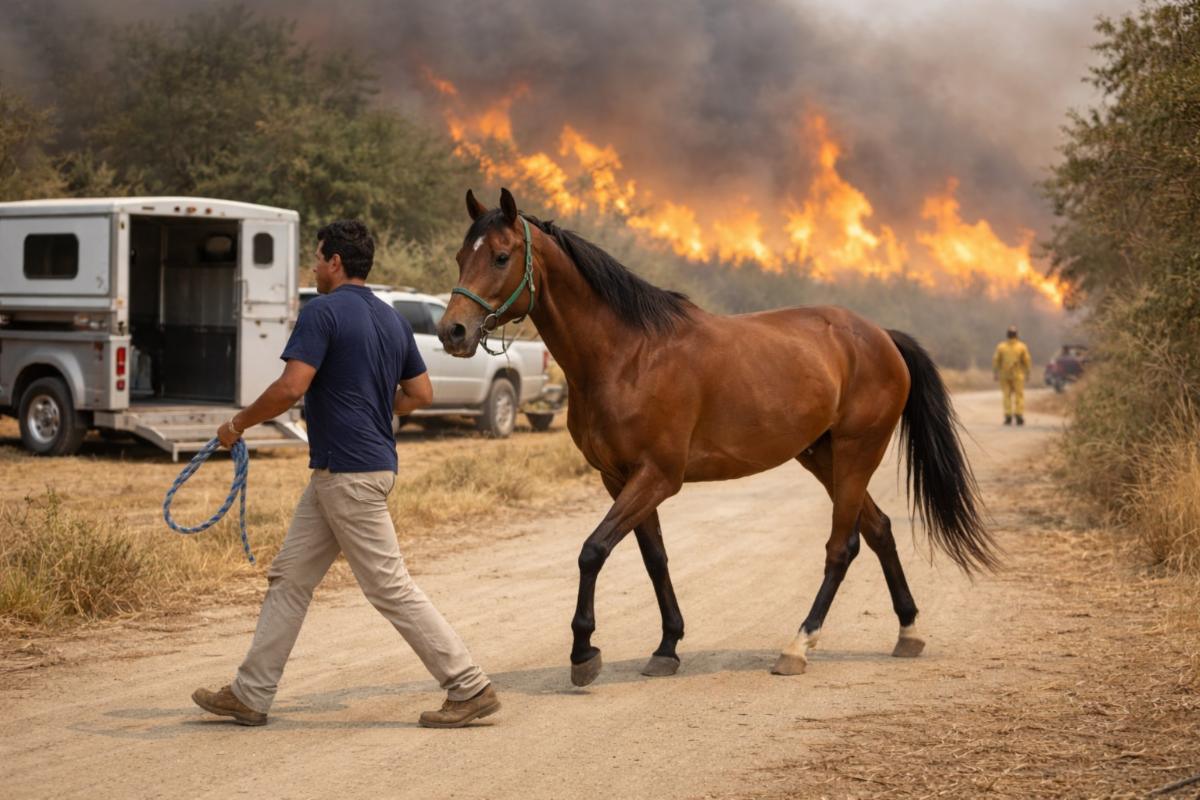
After a long and emotional Calabasas City Council meeting Wednesday night, both City Council members and local residents are poised to take action regarding toxic material possibly being deposited into the Calabasas Landfill.
Guest speaker Colonel Brian D. Sawser of the Army Corps of Engineers dropped a bombshell halfway through the meeting that fire debris from the Palisades was going to be moved this coming Monday into local landfills.
Council members emphasized that though the City of Calabasas does not own the landfill (it is owned by the County under a Joint Powers Agreement and operated by the L.A. Sanitation Department) per Cal Recycle guidelines it is a Class III landfill for non-hazardous solid waste. That includes municipal solid waste, appliances, construction and demolition waste, asphalt, greenwater, and fire debris that has been certified non-hazardous. Under a 1991 ordinance from the Los Angeles County Supervisors, debris cannot be deposited from outside the wasteshed – which includes Calabasas, Hidden Hills, Agoura Hills and parts of Ventura County. It does not include Malibu or the Palisades.
However, it has been identified as a possible disposal site for debris from the Palisades Fire, and that had council members and residents up in arms and threatening action. Some residents said they felt they would have to move out of the area to protect their children – and future grandchildren. City Council members including Ed Albrecht and James Bozajian asked why they just couldn’t send it to empty land in Nevada. Councilmember David Shapiro asked who will be testing the material that comes to Calabasas, saying we are looking 20-30 years down the line.
Sawser explained the process by which debris would be removed and transported to landfills – citing a “liner system” that would cover the ash and debris that would then be buried in the landfill. He could not tell the crowd what route the trucks carrying material would take to the landfill, which is located off Agoura Road next to Lost Hills. That was also a concern to residents and council members as many canyons are still closed, and the route to the landfill passes both commercial and residential areas.
City Council members have already met with representatives from the Supervisors’ office, Water Quality Control Board, Army Corps of Engineers, EPA, the Sanitation District, Heal the Bay and the North Santa Monica Bay Watershed, to state their opposition.
All avenues of opposition may have to change however, as the County Board of Supervisors issued a recommendation released Thursday to “find that the temporary waiver of the wasteshed restrictions at the Calabasas Landfill allow it to accept debris generated by the January 2025 Windstorm and Critical Fire Events is necessary… and to authorize the Calabasas Landfill to temporarily accept material from outside the wasteshed to accommodate the emergency disposal of debris… effective immediately and continuing for six months initially, with possible extension options.”
The recommendation also wants to increase the tonnage limits at the Calabasas Landfill immediately, and find that the proposed activities are exempt from the California Environmental Qualities Act.
The City Council drafted three motions Wednesday night in opposition to the possible local disposal. Possible legal action was proposed, and residents, led by Michelle Geller, have planned a protest Monday morning, February 17, at 10 am in front of the landfill.
The motions are:
1. Vehemently oppose any and all debris coming to the landfill based on lack of transparency and information for the City to make decisions.
2. No expansion of hours at the landfill. No expansion of tonnage per day. No expansion to allow debris from outside the wasteshed. No expansion of landfill capacity and an injunctive relief memo.
3. Contains most of the provisions of Motions 1 and 2 but also: To direct the City Attorney to prepare an analysis as to the viability of seeking injunctive relief from State and/or Federal courts. Broadly speaking, the purpose of the injunctive relief would be to prevent the disposal of fire debris at the Calabasas Landfill. Depending upon the course of the potential litigation, the injunction could either be temporary or permanent. To support the export of all debris from the recent fires to unpopulated areas outside of our metropolitan area for disposal. This would essentially parallel what is already being done with the most toxic debris. Though expensive, this would be a common-sense solution to minimize risks to public health and safety.
Another approved motion created an ad hoc committee consisting of James Bozajian and Mayor Peter Kraut, tasked to move forward with implementing the City Council’s directives as outlined above on an expedited basis.