In light of Matthew Perry’s recent passing, questions have arisen on ketamine infusion therapy and its role in treating a slew of mental health concerns, primarily depression. While Perry developed an addiction to the drug, outside of supervised therapy, ketamine has become a popular method to improve mental health symptoms. So, how does it work and is it a safe treatment?
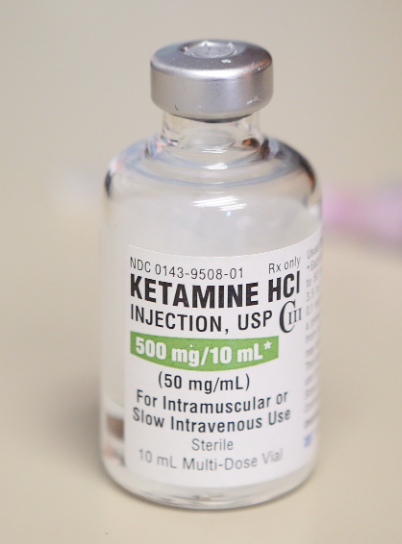
Ketamine was originally created in the 1960s as an anesthetic for animals and then approved by the FDA in the 1970s to be used on humans. It is often referred to as a “dissociative anesthetic hallucinogen” because it distorts the perception of one’s senses, creating hallucinogenic effects. Ketamine can make users detached from not only their environment, but their pain as it causes a state of sedation, immobility and amnesia.
In terms of mental health therapy, low doses of ketamine are administered to treat depression, post-traumatic stress disorder, OCD and more. In 2019, the FDA approved a nasal spray, Spravato, that must be taken in a certified doctor’s office where the patient is led through a guided therapy and then monitored for two hours after receiving the dose.
Depending on the individual, the effects can last hours or days since ketamine produces a short-lived but intense experience that triggers an “afterglow” or positive change in insight, cognition and behavior. Ketamine essentially blocks the activity of the N-methyl-D-aspartate (NMDA) receptor, a portion of the brain that is involved in the regulation of mood, cognition and pain perception.
While psychedelic-assisted therapies are not uncommon in mental health treatments, there are definitely risk factors involved. Not only can it cause temporary physical side effects such as nausea and higher blood pressure, the psychedelic properties can put someone at risk if they are not monitored properly because they may be a harm to themselves in such a dissociative state. Like any drug, there is also the risk of dependency, as seen in the case of Perry. Due to the euphoric effects of the drug, users may seek out the drug in unofficial settings to continue the high and uplifting properties of ketamine.
While proven to be effective, it also comes with a high price tag, in addition to the potential risk of addiction. While some insurances may cover the nasal form of ketamine if specific conditions are met, ketamine therapy can range from $500 to $1,500 per session. Those interested in exploring this mental health therapy must have detailed discussions with their doctors and seek out a ketamine clinician that is well-versed on the protocols, risks and benefits in relation to a patient’s medical health records.