By Martin Cooper
One hundred fifty miles northwest of London is Chatsworth House, an 81,000-square-foot home that has been owned by the Cavendish family since 1549.
Twenty-eight miles northwest of Los Angeles is the San Fernando Valley community of Chatsworth that, in 1888, was named after the English home of the Cavendish family.
What do they have in common? Movies.
Scores of motion pictures have been filmed at Chatsworth House, including Barry Lyndon (1975), Pride & Prejudice (2005), The Duchess (2008), The Wolfman (2010), Death Comes to Pemberley (2013), as well as numerous TV programs.
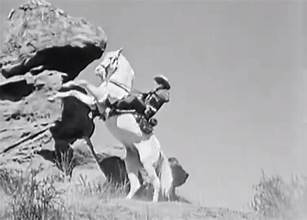
The number of films lensed in the Valley community of Chatsworth number in the thousands, about 3,000 of them on the Iverson Ranch alone.
On March 8, 1888, George Crow filed a map of a subdivision he named Chatsworth Park with the Los Angeles County Recorder’s Office. Three streets were shown on the map, one of which was Devonshire Avenue, named in honor of England’s Duke of Devonshire, the Cavendish family’s title.
Karl and Augusta Iverson homesteaded 160 acres in the 1880s in the Santa Susana Pass area. Over time, their holdings expanded to approximately 500 acres, which formed the Iverson Movie Ranch, all of which was in the community of Chatsworth. In 1915, Chatsworth joined the City of Los Angeles, largely to obtain use of the city’s water.
In 1893, the Chatsworth Train Depot was built near the intersection of Marilla and Topanga Canyon Roads, but in 1917, the original train depot burned down. By that time, however, a larger station had been built on the west side of the tracks between Devonshire and Lassen Streets. It was this second depot that has been featured so prominently in films. Sadly, the then-property owners, Southern Pacific Railroad, tore down the building in 1962.
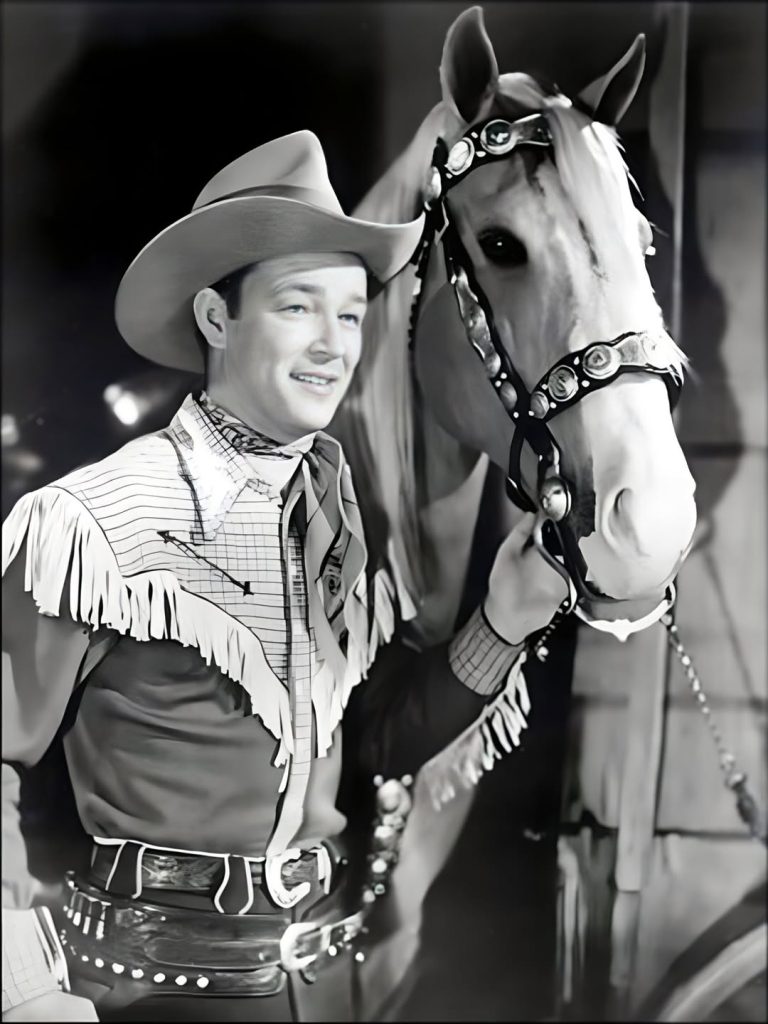
The MTA and the City of Los Angeles bought the property from Southern Pacific, and in the early ‘90s, a new depot was built in the Old West style of the original. In April 1996, the new depot was dedicated, with former Chatsworth residents Roy Rogers and Dale Evans participating in the ceremony.
Movies that have filmed at either the Chatsworth Train Depot or the nearby tunnels have included Cecil B. DeMille’s The Squaw Man (1914); the musical comedy, Pigskin Parade (1936), starring Jack Haley and Judy Garland, in her first feature film; Fancy Pants (1950), starring Valley residents Bob Hope and Lucille Ball; and the sci-fi cult classic, Invasion of the Body Snatchers (1956).
Some of the best-known motion pictures filmed partially or totally in Chatsworth, many on the Iverson Ranch, are: The Perils of Pauline (1914); The Mark of Zorro (1920), starring Douglas Fairbanks; Angels (1930), Howard Hughes’s epic aerial drama, with iconic dogfight scenes above the Chatsworth area and Chatsworth Lake; The Lightning Warrior (1931), a Rin Tin Tin serial; The Good Earth (1937), Pearl Buck’s novel, with its terraced Chinese farmlands built on-site at Iverson; and Quentin Tarantino’s Django Unchained (2012).
One of the more interesting film-related structures in the area is the Pioneer Church. Built in 1903 as the Chatsworth Community Church, it served as a high school from 1906 to 1908. It was relocated in 1965 to its present location at Oakwood Memorial Park thanks to the Chatsworth Historical Society, with donors like Roy Rogers and Dale Evans supporting the effort. The church was designated as Los Angeles Historic-Cultural Monument No. 14 in 1963.
Nearby, the silent version of Jack and the Beanstalk (1917), directed by Chester M. Franklin and Sidney A. Franklin, was filmed. Other films and numerous TV shows used the Pioneer Church as a set.
Oakwood Memorial Park is also “home” to a number of filmdom’s greats: Fred Astaire, Ginger Rogers, Gloria Grahame, Stephen Boyd, Adele Astaire, Montie Montana, and scores of behind-the scenes artists and technicians.
Not surprisingly, Chatsworth’s location filming drew film professionals, actors and many others to live in the community.
Among the better-known names in motion pictures who at some point called Chatsworth home were Lucille Ball and Desi Arnaz, who owned a ranch in Chatsworth in the 1940s; John Stamos; Kevin Spacey, who was raised in Chatsworth and attended Chatsworth High School; Val Kilmer, who lived in Chatsworth as a youth; and Marilyn Monroe, who lived in Chatsworth as a teenager.
Frank Sinatra lived for about a decade on a hilltop estate in Chatsworth in the 1950s and ’60s. The property, designed by William Pereira, has since been featured in many films and TV shows. Errol Flynn owned a hunting lodge in Chatsworth and built a dam north of the 118 Freeway near Browns Canyon Road. Lionel Barrymore, once Chatsworth’s honorary mayor, lived in the community in the 1940s and early ’50s.
Whether it be among the 35,000 acres within which England’s Chatsworth House sits, or the once-near-barren desert of today’s Chatsworth in the San Fernando Valley, both have earned their places in cinematic history.
Martin Cooper, President of Cooper Communications, supervised PR for the Academy of Motion Picture Arts & Sciences for 10 years; held executive positions with Disney and Universal Studios; and was Board Chairman of the UCLA Film & Television Archive.
His fifth book, The ‘Reel’ Hollywood: The San Fernando Valley, the history of motion pictures in the Valley, will be out later this year.